Media - Double
Diploma - Film and Television Production
“I love the creative freedom that this course gives you compared to others.”
Entry Requirements
Four GCSEs at grade 4 including English Language and/or Maths
Subject Intent
This is a Double option course, meaning students get the chance to dive deep into specialised skills for creating a film or television product such as storyboarding, sound recording and scriptwriting well as covering all the elements of the Media Single in Digital Film and Television Production.
This course offers students the chance to gain a thorough understanding of how digital media products are created and how the industry operates across multiple sectors, with a focus on film and television as well as sound recording and launching a new media product. Within the course students will develop their verbal and written communication skills, as well as developing their creativity. Over the two-year course students will learn a range of practical skills in filming and editing as well as the ability to produce in-depth analytical reports and plan productions in a professional, creative way. The course is structured to fit perfectly with further study in the digital media subject area, or to help students progress into employment.
Course Introduction
This is a creative and practical course. It is a very varied course involving scriptwriting, storyboarding and sound recording as well as devising and creating your own new media product. It covers researching, planning and creating a range of film and video products, learning to work from a script to create a storyboard and how to record professional-quality sound for your film products.
We teach you to use all the equipment and software required to film and edit moving images and to record high quality sound, which prepares you well for further study and future employment.
This is an excellent choice if you are interested in working in the Media industry or making film and video content for any sector. You will learn how to create professional-quality scripts and storyboards, how to record audio as well as shooting and editing a variety of television and film products including films, trailers, television programmes and promotional videos.
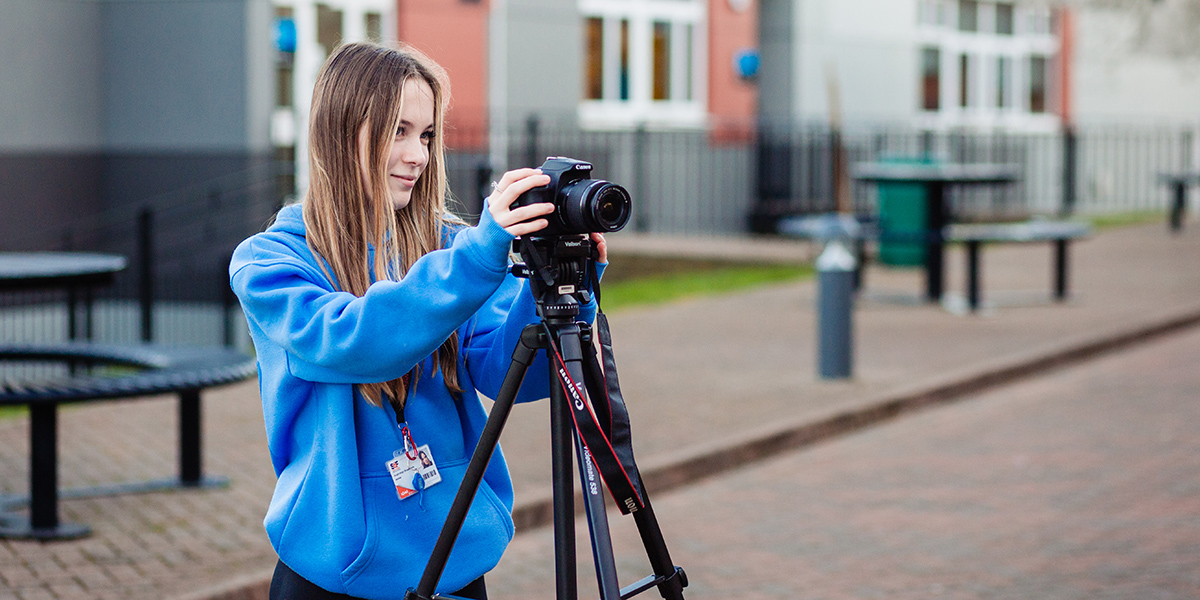
We have a dedicated green screen room and photographic studio for creating professional-quality productions, a full range of cameras, lighting and sound recording equipment as well as professional editing software including Adobe Premier Pro for editing moving images.
Course Modules
You will have a mixture of classroom-based lessons, group work, practical sessions and the chance for independent study. Units are always built around an industry scenario and the work follows the path of research, planning and production. You will take on the roles of people who work in the media such as producer, director, editor and camera operator, and learn to use a full range of equipment such as cameras, lighting and the green screen. You will also learn how to research and plan a production, including creating a storyboard and planning a lighting set-up. In this course the emphasis is on learning to work in a professional way, and you will work both by yourself and with other students.
Units will cover a wide range of media and techniques such as those listed below:
- Scriptwriting
- Storyboarding for Digital Media Products
- Sound Recording
- Media Enterprise
- Responding to a Commission
Plus, the Modules from Media Single course:
- Film Editing Techniques
- Single Camera Productions
- Lighting Techniques
- Fiction Film Production
- Digital media Skills
On completing this course, many of our students take the option of studying the Art, Design & Media Foundation Diploma here at the college before going on to university. A high percentage of students from this course go on to study at university and/or work in the Media industry.
Assessment
The course is primarily assessed through coursework with an External Assessment element in the second year.
Course Fact
Each year the course is included in a Creatives Industries careers fair in college, with workshops and talks from a wide range of employers and universities in the sector.
Camera Operator | Film Maker | Animator | Radio/Television Presenter | Sound Technician | Games Designer
Marketing Manager | Art Editor | Journalist | Creative Director