

What is Wellbeing?
We are all familiar with the term wellbeing, but do you know what it actually means? Here you can find out useful definitions, assess your own wellbeing levels and then consider how you might use the information to boost your own levels. All the information on this page comes from scientific psychological research, so you know that it can be trusted.
Why would you want to increase your wellbeing?
Research shows that those who consider themselves to have high levels of personal wellbeing are healthier, happier, feel supported, are more resilient to stress and perform well academically.
What is the difference between mental illness and mental wellbeing?
These are two terms that often get confused. Mental illness refers to mental health conditions that a person may be diagnosed with, for example clinical depression or anxiety disorder. Mental Wellbeing however refers to how you are feeling on a day-to-day basis, think of is as “doing well and feeling well”. Mental wellbeing consists of a combination of emotional states, thinking processes and behaviours.
Wellbeing is not just about eating healthily, exercising, and sleeping well, although these are important factors. Psychologists have created different models of wellbeing, and these can help us to understand what actions we can take to increase it.
PERMA model of wellbeing
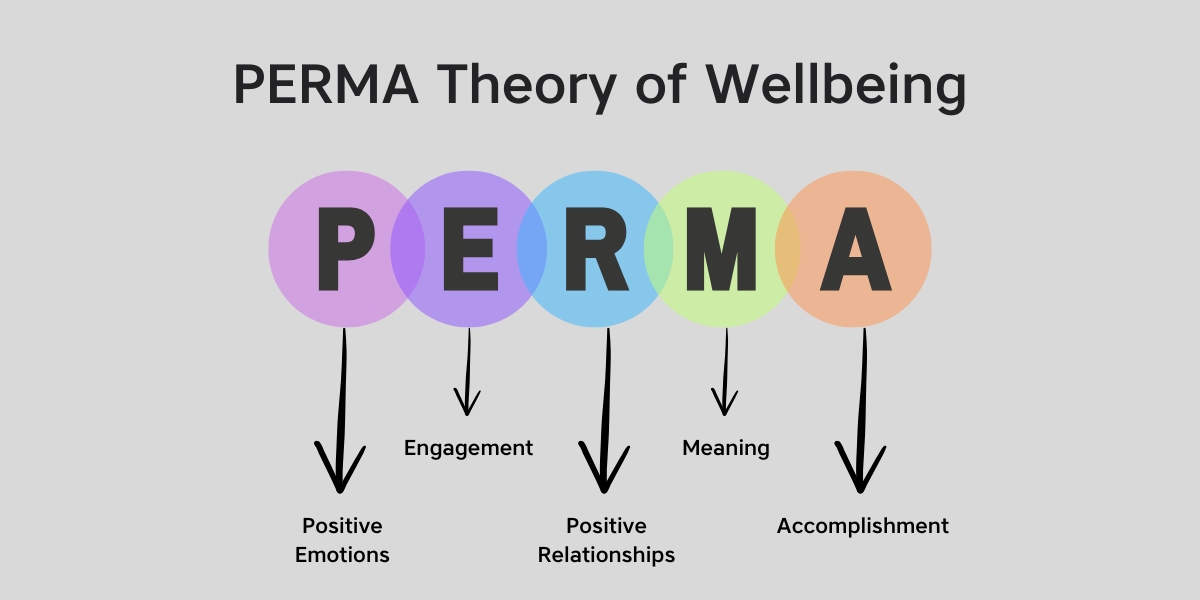
One model of wellbeing is called the PERMA and was developed by Martin Seligman. This model suggests that to have good wellbeing a person must experience positive emotions, feel a sense of engagement, have good relationships, feel that their life is meaningful and experience accomplishment in their day-to-day life. PERMA stands for:
- Positive emotions
- Engagement
- Positive relationships
- Meaning
- Accomplishments
Video 1 - Wellbeing - What's the fuss about?
Another model of wellbeing is known as “The 5 ways to Wellbeing” – you might be familiar with this from school. You can find out more about what the 5 ways are in this video.
Video 2 - The Five Ways to Wellbeing - boosting mental wellbeing
Reflective Questions
Below are some reflective questions for you to answer which will help you to figure out your own wellbeing levels:
Positive Emotions
- What positive emotions are you experiencing on average day?
- Are you tuned in and noticing the positive emotions or are you focusing more on the negative feelings?
Engagement
- Can you think of a time when you've been lost in the moment and time went quickly for you? What were you doing in this moment?
- Are you in "flow" during an average day? Did a lesson fly by?
- Do you have hobbies that you do where time runs away with you?
Relationships
- Do you surround yourself with people who make you feel good?
- Are you putting time and effort into nurturing relationships with those around you?
- Are you a friend who offers support to others when they need it?
Meaning
- What matters to you in life? (for example, success, kindness, humour)
- How do you experience these values in your day-to-day life?
- Are your choices in life linked to your values?
Accomplishment
- What are the little wins in your day today? Can you write down 3 things that you accomplished today? This week?
- What have you achieved in the past that you are most proud of?
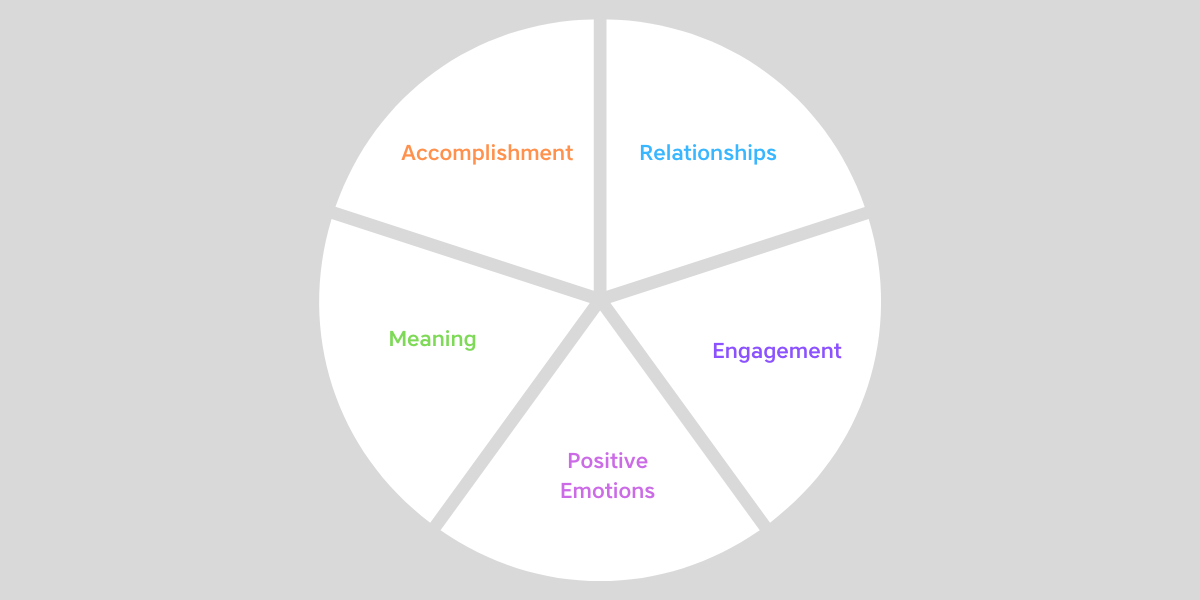
Use the pie chart to colour in each segment so that it represents your level of each element of wellbeing. For example, if you feel that you experience a lot of positive emotion in your day-to-day life, go ahead and colour in the whole segment. If you feel that you would like to experience or tune into your positive emotions more frequently than perhaps just shade in half of the segment.
Once you have finished this, sit back and reflect on your wellbeing. Which area of wellbeing has the most colour, and which has the least? Can you think of one way in which you could increase your wellbeing for each segment? Below are some suggestions. Remember that even small changes to our day-to-day routine can lead to big improvements in our feelings of wellbeing.
Suggestions for increasing your wellbeing
Positive Emotions
- Laugh with a friend
- Watch a funny film
- Get up and watch the sunrise
- Eat your favourite food
- Play your favourite music
Engagement
- Play music
- Play sport
- Meditate
- Yoga
- Go for a walk
- Read a book
- Art project
- Research uni courses/jobs
Relationships
- Call a friend
- Share a happy memory
- Give a hug
- Offer support
- Write a thank you letter
- Organise a social event
Meaning
- Donate to charity
- Volunteer
- Research future careers
- Make a list of the characteristics you admire in others
- Write yourself a motto
- Keep a diary/journal
Accomplishment
- Try something new
- Make something/build something
- To do list (and cross it off!)
- Write down 3 weekly wins